
Effective Shopify App Store Optimization Strategies
Xavierapps
Author
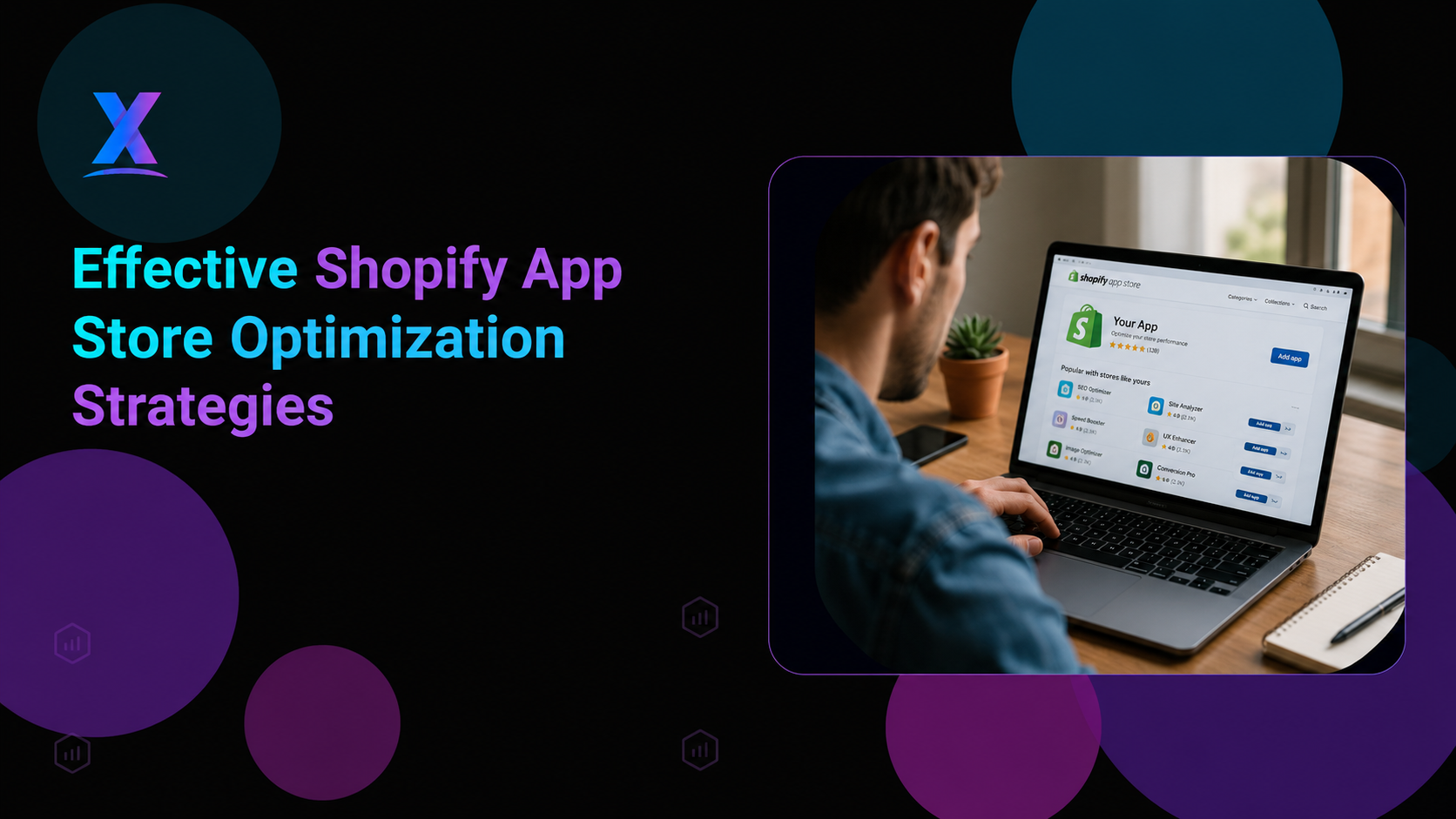
Effective Shopify App Store Optimization Strategies: Maximizing Visibility in Shopify's App Store through ASO
Shopify App Store Optimization (ASO) is the practice of improving your app listing so it ranks higher in Shopify App Store search results and converts more merchant visits into installs. An ASO refresh can move install rates meaningfully in weeks, without paid spend.
What Is Shopify App Store Optimization and Why Does It Matter?
ASO in the Shopify context is not keyword stuffing. It is a systematic effort to align three core signals: keyword relevance, visual quality, and social proof through ratings and reviews.
Keyword relevance determines whether a Shopify merchant searching for "inventory sync" or "wishlist app" even sees your listing. Visuals (the app icon, feature graphic, and screenshots) determine whether that merchant clicks. Ratings and review volume determine whether they install. Miss any one of these and the others stop mattering.
The direct business impact is merchant acquisition. A higher-ranking listing generates organic installs without paid spend. An ASO refresh carried out at Xavierapps resulted in a 22% increase in app install rates across a 6-week window, a meaningful return for changes that cost almost nothing compared to paid acquisition campaigns.
How to Optimize Your Shopify App Listing for Search
Your app title and description are where keyword placement starts. If your target search phrase is "inventory sync," that phrase needs to appear in the app title or the opening lines of the short description, not buried in paragraph four. Shopify's search algorithm weights terms that appear early and in prominent fields.
Write your description for a Shopify merchant, not a crawler. Lead with the problem the merchant has ("products going out of stock across multiple sales channels"), then address it directly ("this app syncs inventory in real time across your Shopify store and connected warehouses"). Merchants read fast; get to the value in the first sentence.
Visuals are underestimated. Screenshots should show the app's actual interface inside a Shopify admin context, not generic mockups. Annotate them with short captions that name the feature being shown. A merchant comparing three apps will partly decide based on which listing looks the most credible at a glance.
Your call-to-action should be specific. "Install free for 14 days" outperforms "Try it now" because it addresses the merchant's risk concern before they have to ask.
How Reviews Drive Shopify App Visibility and Ranking
Shopify's App Store search algorithm treats review volume and rating as ranking signals. A new app with zero reviews is at a structural disadvantage against an established competitor with 200 reviews, even if the newer app is technically superior.
Getting the first 50 reviews is the milestone that matters most for a new listing. Identify your early installs and reach out directly with a short, personal email asking for honest feedback. Make the ask specific: "Would you be willing to leave a review on our Shopify listing? It takes about 60 seconds." Vague requests get ignored; specific ones get responses.
In-app prompts work when timed correctly. Trigger a prompt after the merchant completes a meaningful action. For an inventory app, that might be the first successful sync. At that moment, the merchant has just experienced the value and is most likely to respond positively.
Do not offer incentives in exchange for positive reviews. Shopify's partner policies prohibit review manipulation, and the risk of being delisted outweighs any short-term gain. Focus instead on delivering a setup experience good enough that merchants want to leave feedback without being asked twice.
Social proof compounds. Once you have 20 to 30 reviews averaging above 4.5 stars, new merchants are more likely to install without hesitation, which accelerates both organic ranking and word-of-mouth across Shopify communities.
Which Shopify Apps Metrics Should You Track for ASO?
Optimizing a Shopify app listing without measurement is guesswork. The metrics that matter most are keyword ranking position, listing conversion rate (impressions to installs), and retention rate (merchants who remain active after 30 days).
Keyword ranking tells you whether your title and description changes moved the needle for your target phrases. If you are targeting "inventory" keywords and your ranking is not improving after two to three weeks, the optimization approach needs to change, not just the wording.
Listing conversion rate comes from data Shopify surfaces in the Partner Dashboard. If 500 merchants viewed your listing and 30 installed, you are converting at 6%. Any significant drop after a listing change tells you something broke. Any significant increase tells you what to repeat.
Retention rate is the ASO metric most app developers ignore. A high install rate paired with high churn signals a gap between what the listing promises and what the app delivers. That gap also tends to generate negative reviews, which then suppress the ranking your ASO work built.
Run a structured iteration cycle. Make one or two listing changes at a time, give them three weeks to stabilize, then measure and adjust. Changing the title, screenshots, and description simultaneously makes it impossible to know which change drove the result.
FAQ
What are the key components of Shopify App Store Optimization?
Shopify App Store Optimization involves three core elements: keyword placement in the app title and description, high-quality visuals including screenshots and icons, and review volume with a strong average rating. Keyword research should focus on the specific phrases Shopify merchants use when searching for apps in your category. All three components work together; strong keywords with weak visuals or no reviews will not produce consistent install growth.
How can I get more reviews for my Shopify app listing?
The most effective approach is a direct, personal email to early installers asking for honest feedback and linking to the review page. In-app prompts timed to appear after a merchant completes a key action also convert well. Avoid offering incentives for reviews, as this violates Shopify partner policies.
How do tracking metrics help with Shopify app promotion?
Tracking metrics lets you separate what is working from what is not, so optimization is based on data rather than assumptions. Monitoring keyword ranking, listing conversion rate, and retention rate together gives a complete picture of your app's performance in the Shopify Apps Store. Without this data, you risk repeating changes that do not move the metrics that matter.
About Xavierapps
Xavierapps is a full-stack Shopify and web development agency working across Shopify, React, Node.js, React Native, and CRM integrations. The team specializes in Shopify App Promotion, helping app developers improve listing performance, merchant acquisition, and long-term install growth through structured ASO and Shopify app marketing strategy. You can explore apps built by the Xavierapps team on the Xavierapps Shopify Partner store.
Written by Xavierapps
Curating the best insights in technology and creative design.